Sometimes, the most interesting environmental ideas are not the most complicated.
On the Norwegian island of Smøla, researchers tested a remarkably simple idea: paint one blade of a wind turbine black.
The aim was to make the rotating blades more visible to birds and in doing so, reduce fatal collisions.
The results were difficult to ignore.
Researchers reported a reduction of more than 70% in the annual bird fatality rate at turbines with a painted blade compared with neighbouring unpainted turbines.
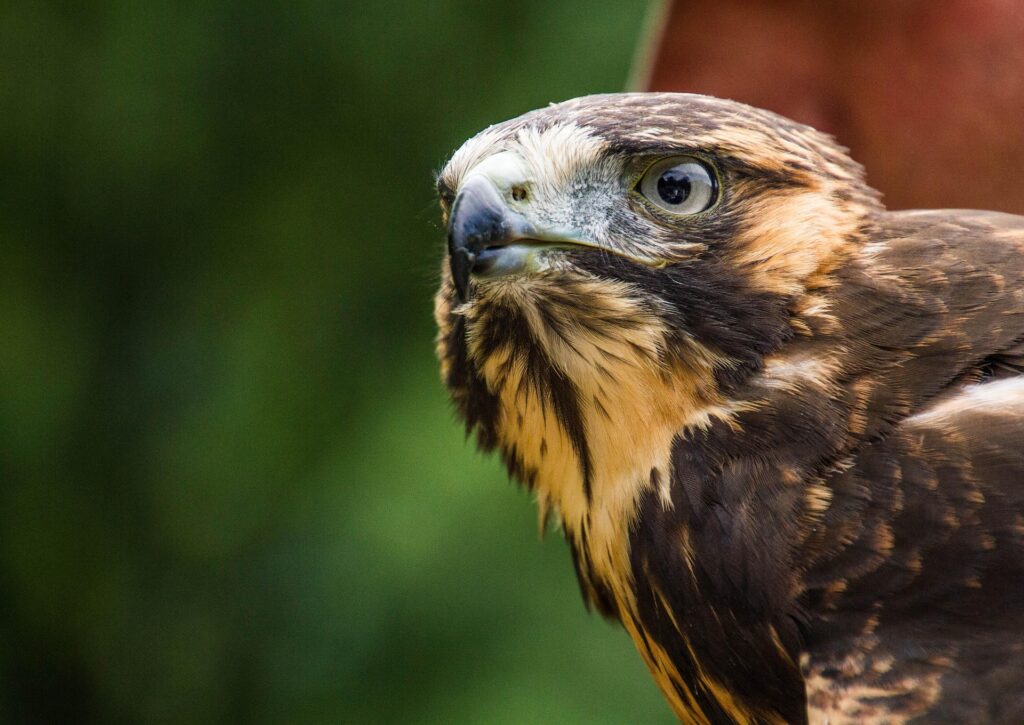
Among raptors, the effect appeared particularly significant. After the blades were painted, no white-tailed eagle carcasses were recorded at the treated turbines during the study period.
One blade.
Black paint.
A potentially significant reduction in bird deaths.
But this isn’t really a story about black paint.
It’s about whether environmental mitigation is treated as an afterthought or as part of infrastructure design from the outset.
Renewable Does Not Automatically Mean Impact-Free
The transition towards renewable energy is essential.
But I think there is a danger in assuming that because infrastructure is labelled green or renewable, its relationship with the natural world no longer needs to be questioned.
Wind energy can help reduce our reliance on fossil fuels, but wind farms still exist within landscapes and ecosystems.
Birds move through those landscapes.
Species forage, migrate and breed within them.
Habitats do not disappear simply because the infrastructure we build has a lower carbon footprint.
For me, this is where the conversation becomes interesting.
The question should not simply be: how quickly can we build renewable infrastructure?
It should also be: how intelligently can we design it?

What Happened at Smøla?
The Smøla wind-power plant sits within a landscape used by a range of bird species, including white-tailed eagles.
Researchers wanted to explore whether increasing the visual contrast of turbine blades could reduce collisions.
There is a theory that rapidly moving turbine blades can become visually difficult for birds to detect. By painting one blade black, researchers hoped to increase the contrast and make the rotating structure more visible.
Four turbines had one rotor blade painted black and were compared with four neighbouring control turbines.
The researchers used bird fatality searches before and after the intervention.
The annual fatality rate at the painted turbines fell by more than 70% relative to the control turbines.
It is an extraordinary result.
But it is also important not to turn one study into a universal solution.
The researchers themselves recommended repeating the experiment at other locations and with more turbines to understand whether the results could be replicated across different landscapes and species.
That caution matters.
Ecology is rarely one-size-fits-all.
What works for a white-tailed eagle in Norway may not have the same effect on a seabird moving through an offshore wind development in Britain.
But surely a result this significant deserves further investigation?
Britain Is Beginning to Ask the Same Question
Interestingly, the UK is now doing exactly that.
The Department for Environment, Food and Rural Affairs has commissioned an Offshore Wind Turbine Blade Painting Pilot.
The project is designed to investigate whether blade painting could reduce the risk of bird collisions in an offshore environment.
Rather than simply copying the Norwegian approach, the pilot will look at different blade patterns under controlled conditions before testing their effectiveness offshore.
Researchers will consider which species respond to blade painting, whether avoidance rates increase and whether there are unintended consequences, such as birds being displaced further from important areas.
This is the part I find particularly encouraging.
It is not simply taking an interesting result and declaring the problem solved.
It asks whether the idea can be adapted, tested and understood in a different ecological context.
That is exactly how environmental innovation should work.
Designing With Nature in Mind
What stood out to me most in the Norwegian research was something mentioned almost in passing.
Painting turbine blades that were already operational was difficult and resource-intensive.
Specialist personnel were needed; the work depended on suitable weather conditions and accessing blades already installed on turbines created obvious practical challenges.
But the researchers noted that implementing the measure before construction could minimise those costs.
And that raises a much bigger question.
How many environmental problems become expensive because we try to mitigate them after the infrastructure has already been designed?
We build.
We monitor.
We identify the ecological impact.
Then we ask how to fix it.
What if we reversed that process?
What if ecology had a stronger voice at the design table from the very beginning?
Not as a final assessment.
Not as a box to tick before planning permission is granted.
But as part of the design process itself.
A Small Intervention, A Bigger Idea
The black blade experiment fascinates me because of its simplicity.
It does not require us to choose between renewable energy and bird conservation.
It asks whether we can make renewable infrastructure better.
That distinction matters.
Environmental conversations are so often presented as opposing sides.
Energy or nature.
Food production or biodiversity.
Development or conservation.
But the systems around us are far more complicated than that.
Perhaps the more useful question is how we design systems that acknowledge those connections from the outset.
The answer will not always be black paint.
In fact, further research may show that different colours, patterns or technologies work better for different species and environments.
The UK’s current pilot is specifically designed to explore some of those questions.
But the principle behind the research is what stays with me.
Observe the problem.
Understand the species affected.
Test an intervention.
Monitor the outcome.
Adapt.
It sounds simple.
Yet too often, environmental mitigation begins after the damage has already become visible.
Could More Countries Consider This?
I think they should.
Not necessarily by immediately painting every turbine blade black.
The Norwegian researchers were clear that the experiment should be replicated elsewhere, and differences between species, landscapes and turbine developments need to be considered.
But countries expanding wind energy could surely invest in similar trials.
Local ecology should shape those experiments.
Which species are most at risk?
How do they perceive moving turbine blades?
Could increased contrast reduce collisions?
Would different colours or patterns work more effectively?
And, crucially, could those features be incorporated during turbine manufacture rather than retrofitted years later?
If renewable energy infrastructure is going to become an increasingly significant part of our landscapes and seascapes, then ecological design should develop alongside it.
We should not wait for wildlife decline to force innovation.
More Than One Black Blade
For me, the lesson from Smøla is bigger than wind turbines.
It is about how we approach our relationship with the natural world.
We are incredibly good at designing infrastructure around human requirements.
Efficiency.
Cost.
Energy production.
Access.
Growth.
Perhaps we need to become equally ambitious about designing for the other species that share these landscapes with us.
The Norwegian study does not give us every answer.
The UK’s offshore pilot may raise entirely new questions.
But somewhere between that single black turbine blade in Norway and a multi-year British research programme is an idea worth paying attention to.
Environmental mitigation does not always have to mean undoing damage.
Sometimes, it might mean designing more carefully in the first place.
And perhaps that is where working with nature really begins.