I don’t think I found agroecology conventionally.
There was no childhood dream of becoming an agroecologist. In truth, for much of my life, I didn’t even know the breadth of careers that existed within agriculture, ecology and land management.
My path began somewhere entirely different.
It began with law.
A Dream Put on Hold
I first started studying law in 2012, when I was 21.
I was due to sit my exams when my father died.
My studies stopped, and life changed drastically. The future I had imagined for myself suddenly disappeared beneath everything that comes with grief and trying to work out who you are when your life no longer looks the way you expected it to.
The years that followed were full.
I had children. I changed direction. I trained as an equine therapist and worked in the industry for several years.
But law never completely left me.
There was always a niggle in the back of my mind. A feeling that I had left something unfinished. That the career I had once imagined for myself was still sitting somewhere in the background, waiting.
So, at 31, I took the plunge and went back.
This time, studying looked very different.
There were children to care for, work to juggle and family life to navigate. My husband’s career involved a lot of travel, and finding the time and headspace to study was not always easy.
At the time, I still imagined becoming a barrister. For years, I had assumed criminal law would be my path.
I loved studying law. It was intense and, at times, incredibly difficult, but I enjoyed learning how systems worked, how legislation shaped decisions and how the words written into policy could have very real consequences.
Graduating with First Class Honours was something I was incredibly proud of.
But somewhere during my final year, my direction began to change.
The Project That Changed Everything
As part of my degree, I had the opportunity to undertake an independent research project.
I chose to explore the Environmental Land Management schemes and the legal and policy framework surrounding the changing way we support land management and agriculture in England.
Until then, I had always had an interest in the countryside and farming, but my understanding was relatively limited. Farming was farming. The countryside was the countryside.
The deeper I went into my research, the more I began to realise how extraordinarily complicated the relationship between land, food, farming, legislation and environmental policy really is.
A decision made in government can change the way a farmer manages a field.
A payment scheme can influence what happens to soil, hedgerows and habitats.
Environmental ambitions written into policy eventually must meet the reality of people trying to run farms, produce food and make a living.
I became fascinated by the space where law and the land collided.
For the first time, I began to wonder whether my law degree might take me somewhere entirely different from the courtroom I had once imagined.
After graduating, I spent some time working with the Crown Prosecution Service. The work was incredibly interesting, but it also confirmed something I had slowly begun to realise.
Criminal law was no longer where I saw my future.
And, if I’m truthful, I felt a little lost.
I had finally completed the degree I had spent so many years wanting to finish.
Now what?
Then I Read a Book
Around this time, my aunt recommended The Lie of the Land by Guy Shrubsole.
I was hooked from the first chapter.
It made me angry.
It made me curious.
More importantly, it made me question the landscapes I had spent years walking through without truly understanding what I was looking at.
Who owns our land?
Who decides how it is managed?
Why are farmers so often blamed for problems created much further up the system?
How have wealth, ownership, legislation and policy shaped the countryside we see today?
And why do so many of us know so little about the land that feeds us and sustains us?
There it was again.
Law.
Agriculture.
Ecology.
Policy.
Power.
Land.
All tangled together.
And instead of feeling overwhelmed by that complexity, I wanted to understand it. I wanted in.
The Land Had Already Been There
Looking back, perhaps this change in direction wasn’t as sudden as it felt.
I spent much of my twenties feeling lost.
There were periods of depression and anger and years when I struggled to feel entirely settled within myself.
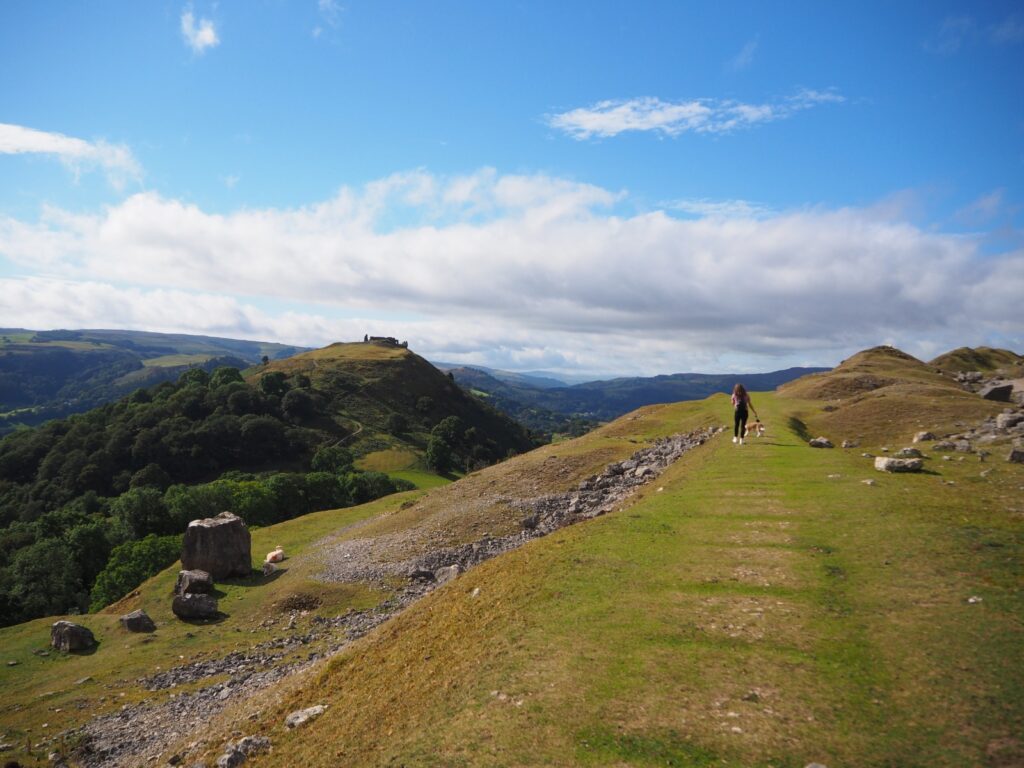
Then I started walking.
Walking became hiking.
Hiking became mountains.
Ben Nevis. Scafell Pike. The fells. The dales. The Highlands.
Somewhere along the way, the land gave me something I hadn’t been able to find elsewhere.
Quiet.
Perspective.
A sense of being completely alive and at the same time, completely at peace.
I am never happier than when I am outside. Boots muddy, wind in my face, surrounded by a landscape that makes me feel incredibly small.
Nature helped me find my centre long before I understood that I might one day build a career around trying to understand and protect it.
Maybe I didn’t suddenly find the land.
Maybe I finally started listening to it.
Why Agroecology?
Agroecology gave a name to so many of the questions I had begun asking.
It asks us to look at farming as part of a much wider living system.
Soil. Water. Food. Biodiversity. Farmers. Communities. Policy. Economics.
None of these things exists in isolation.
That is what fascinates me.
I am interested in the systems behind our landscapes and in the decisions that shape them. I want to understand why things are done the way they are, who benefits from those decisions and what happens when policy meets the reality of the field.
But there is hope here, too.
There are farmers, researchers, conservationists and communities already questioning the status quo. People are experimenting, restoring, adapting and finding ways to produce food while working more closely with natural systems.
I want to learn from them.
And I want to be part of that conversation.
That is why I applied for an MSc in Agroecology.
When I was offered a place, I was ecstatic. Coming from a legal background with relatively little formal experience in agriculture, I wasn’t entirely sure what to expect.
But the course felt like it connected all the pieces I had been slowly gathering.
Law. Policy. Farming. Ecology. The future of our landscapes.
For the first time in a long time, the path ahead felt clear.
Rooted in the Land
Rooted in the Land grew from that feeling.
It is inspired by the books that have made me stop, question and look again. Books like The Lie of the Land, Sixty Harvests Left and Rooted.
I want this to be a place for curiosity.
A place where I can document what I am learning, spend time with the people working closest to the land and explore the complicated systems shaping our countryside.
I imagine a future spent outside.
Walking landscapes. Visiting farms. Meeting land managers. Listening to researchers. Asking questions. Advising, learning and continuing to build my knowledge.
Then sharing it.
Through writing. Through film. Through photography. Through conversations.
I want to give the land a voice.
Perhaps more importantly, I want to help people look at a field, a farm or a familiar stretch of countryside and ask a question they might never have asked before.
Because I have children.
And one day, they may have children of their own.
I want there to still be something here for them.
Healthy soil. Living landscapes. Working farms. Wildlife. Wild places.
Something worth inheriting.
For many years, the land gave me somewhere to find myself.
Now, while there is still so much worth fighting for, I want to spend my future learning how I can give something back.
This is where that journey begins.
One Response
Oh my Goodness what an incredibly interesting blog. I love it. It has been years that I have been looking for something as life affirming as this!!!!